
Fertility testing isn’t just about eggs and ovulation. Sperm health matters too.
When you’re trying for a baby, fertility is often thought of as a women’s health issue. But sperm health plays an equally important role in conception. At Eve Health in Brisbane, we understand that fertility concerns can bring up a lot of questions. Our fertility specialists can help you explore possible causes and discuss your options, so you can make informed decisions about your next steps.
When should you see someone about male fertility?
When pregnancy isn’t happening as expected, it’s natural to wonder why.
Fertility involves both partners, so when a couple is having difficulty conceiving, it’s important to look at both sides of the picture. Male fertility testing is often part of the initial investigations, alongside tests to assess female reproductive health.

As a general guide, it’s worth speaking with a GP or fertility specialist if:
- You’ve been trying to conceive for 12 months without success.
- The female partner is 35 or older and you’ve been trying for six months.
- Either partner has a known health condition that could affect fertility.
- There are concerns about sperm health, sexual function or previous reproductive health issues.
If the female partner is over 40, or either partner has a known fertility concern, it’s worth seeking advice sooner.

Can men have fertility problems without any symptoms?
Sperm health isn’t something you can judge by how someone looks or feels. Think of fertility testing as putting together the pieces of a puzzle. Checking sperm health is one important piece that can help build a clearer picture of what’s happening.
And importantly, an abnormal test result doesn’t necessarily mean pregnancy isn’t possible.
A male fertility test in Brisbane can help identify potential concerns early, allowing your specialist to discuss the next steps for your individual circumstances.
What male fertility tests can be done?
Male fertility testing usually starts with a conversation about your health, medical history and any previous fertility concerns.
From there, your doctor can recommend tests based on your circumstances. Not everyone needs every test.
Semen analysis
A semen analysis is usually the first step in checking male fertility.
It involves providing a semen sample, which is examined in a laboratory to assess:
- Sperm count: How many sperm are present.
- Sperm movement: How well the sperm swim.
- Sperm shape: Whether the sperm have a typical structure.
- Semen volume: How much fluid is produced.
These details help your doctor understand whether sperm health could be affecting your chances of conceiving.
Sperm results can naturally vary, so you may be asked to repeat the test before any conclusions are made.
Blood tests
Blood tests can help check hormone levels that play a role in sperm production, including testosterone and other reproductive hormones.
Depending on your history and results, your doctor may also recommend tests for other health conditions that could affect fertility.
Sperm DNA fragmentation testing
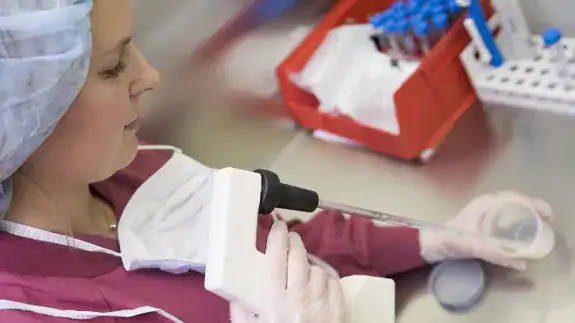
Sperm carry genetic information that contributes to an embryo’s development.
Sometimes, this DNA can become damaged or fragmented. A sperm DNA fragmentation test looks at the amount of damage present.
This isn’t a routine test for everyone. Your specialist may discuss it in certain circumstances, such as ongoing fertility difficulties or particular findings in your medical history
Other investigations
If initial tests suggest a possible problem, further investigations may be recommended.
These could include a physical examination, an ultrasound to look for changes in the testicles, or genetic testing in selected cases.
The aim is to understand the bigger picture rather than relying on one result alone.
What treatments are available for male fertility problems?
If testing identifies something that may be affecting your fertility, the next step is understanding what can be done about it.
Treatment depends on the underlying cause, your sperm test results and your individual circumstances. Sometimes, a combination of approaches may be considered.
Lifestyle changes
Certain everyday habits can affect sperm health.
Your specialist may recommend changes such as:
- Stopping smoking or vaping.
- Reducing alcohol intake.
- Maintaining a healthy weight.
- Getting regular exercise and adequate sleep.
- Avoiding anabolic steroids and discussing any testosterone treatment with your doctor.
Sperm take around three months to develop, so changes may take time to show up in test results.
Treating an underlying medical condition
Sometimes, fertility difficulties are linked to a medical issue, such as a hormone imbalance or a varicocele (enlarged veins around the testicle).
Depending on the cause, treatment might involve medication or a referral to a urologist for further assessment.
Not every condition needs treatment, and treating an underlying issue doesn’t always improve fertility. Your specialist can explain what’s appropriate for your situation.
Intrauterine insemination (IUI)
IUI or artificial insemination involves preparing a semen sample in a laboratory and placing the sperm directly into the uterus around the time of ovulation.
It may be considered when sperm quality is suitable and other fertility factors have been assessed.
IVF and ICSI
For some couples, assisted reproductive treatment may be an option.
In vitro fertilisation (IVF) involves combining eggs and sperm in a laboratory to allow fertilisation to occur.
Intracytoplasmic sperm injection (ICSI) is a technique used during IVF where a single sperm is injected directly into an egg. It may be recommended when sperm numbers, movement or other factors make fertilisation more difficult.
In some cases, sperm may need to be collected through a surgical procedure, with the involvement of a urologist.
Your fertility specialist can explain the potential benefits, limitations and risks of each option, including whether fertility treatment is likely to be suitable for you.
Taking the next step
Fertility concerns can feel personal, and it’s understandable to have questions about what testing might reveal.
But you don’t need to have all the answers before asking for help.
If you’re considering a male fertility test in Brisbane, our team at Eve Health can help you understand the testing process, review your results and discuss possible next steps.
If you’re concerned about your fertility, speak with your GP about a referral or contact Eve Health to arrange a fertility consultation.
Comments are closed.