
Fertility testing Brisbane
Wondering if it’s time to check your fertility?
If you’ve been trying for a baby and it’s taking longer than you expected, it’s natural to start wondering why. Fertility testing can help us begin to understand what might be happening and what, if anything, needs to happen next.
What can fertility testing actually tell you?
One of the confusing things about fertility testing is that there isn’t a single test that gives you a simple yes or no answer about your fertility.
Instead, think of fertility testing as putting together different pieces of a puzzle. Pregnancy depends on a number of things happening together, so when it is taking longer than expected, it makes sense to look at the whole picture.
For women, this can mean looking at ovulation, hormone levels, ovarian reserve, the uterus, ovaries and fallopian tubes. For men, testing can look at sperm number, movement and shape, as well as other aspects of reproductive health.
Both are important parts of the equation. In fact, male factors are involved in around half of infertility cases, either on their own or alongside female factors. This is why fertility assessment will often consider both partners from the beginning rather than making assumptions about where the difficulty may lie.
Your age, medical and reproductive history, and how long you have been trying to conceive also add important context.
Sometimes these investigations uncover something that may be making conception more difficult. Sometimes there are factors on both sides. And sometimes the tests don’t reveal a clear reason at all.
The purpose of fertility testing is not to find someone or something to blame. It is to understand as much as we can about your fertility picture, so you and your specialist have better information for deciding what comes next.
What if I’m trying to conceive using donor sperm?
You may be thinking about fertility testing even if you’re not trying to conceive with a partner. This might be because you’re planning to have a baby on your own, you’re in a same-sex relationship, or donor sperm is part of your path to pregnancy.
Donor sperm used through fertility clinics and sperm banks goes through screening before it can be used. This includes checks required for donor suitability and safety, although the exact screening process can depend on where the sperm comes from and how it will be used.
Your own fertility assessment is a separate part of the process. Your specialist may recommend looking at things such as your medical and reproductive history, ovulation and reproductive anatomy to help understand which approach to conception may be appropriate for you.
If you’re considering donor sperm, you don’t need to work out which fertility tests you need beforehand. Your fertility specialist can talk you through the testing and donor process, including what has already been assessed in the donor and what may be useful to investigate for you.
Is it time to have your fertility checked?
There’s no need to wait until you feel completely overwhelmed before asking for fertility advice.
As a general guide, it is worth speaking with a GP or fertility specialist if you have been having regular unprotected sex without becoming pregnant for:
- 12 months if the female partner is under 35
- 6 months if the female partner is 35 or older
But these are guides, not dates you need to circle on the calendar.
It can be worth having a conversation sooner if you have irregular or absent periods, endometriosis, PMOS, recurrent pregnancy loss, previous pelvic or testicular surgery, concerns about sperm health or a medical history that may affect fertility.
And sometimes, you simply have questions about your fertility and would like to understand your reproductive health better. You don’t need to wait until you reach a particular milestone to ask them.

What fertility tests might I need?
There’s no standard checklist that everyone has to work through. Your fertility specialist will usually start with your history and circumstances, then recommend investigations that may help answer the questions relevant to you.
Male fertility testing
Fertility testing isn’t just about eggs and ovulation. Sperm health matters too.
A semen analysis is often one of the first investigations when assessing male fertility. It looks at things such as how many sperm are present, how they move and their shape.
If something unexpected is found, it doesn’t automatically tell us why it has happened or what it means for your chances of conceiving. Your doctor may recommend repeating the test or looking at other aspects of your health before discussing what comes next.
Female fertility testing
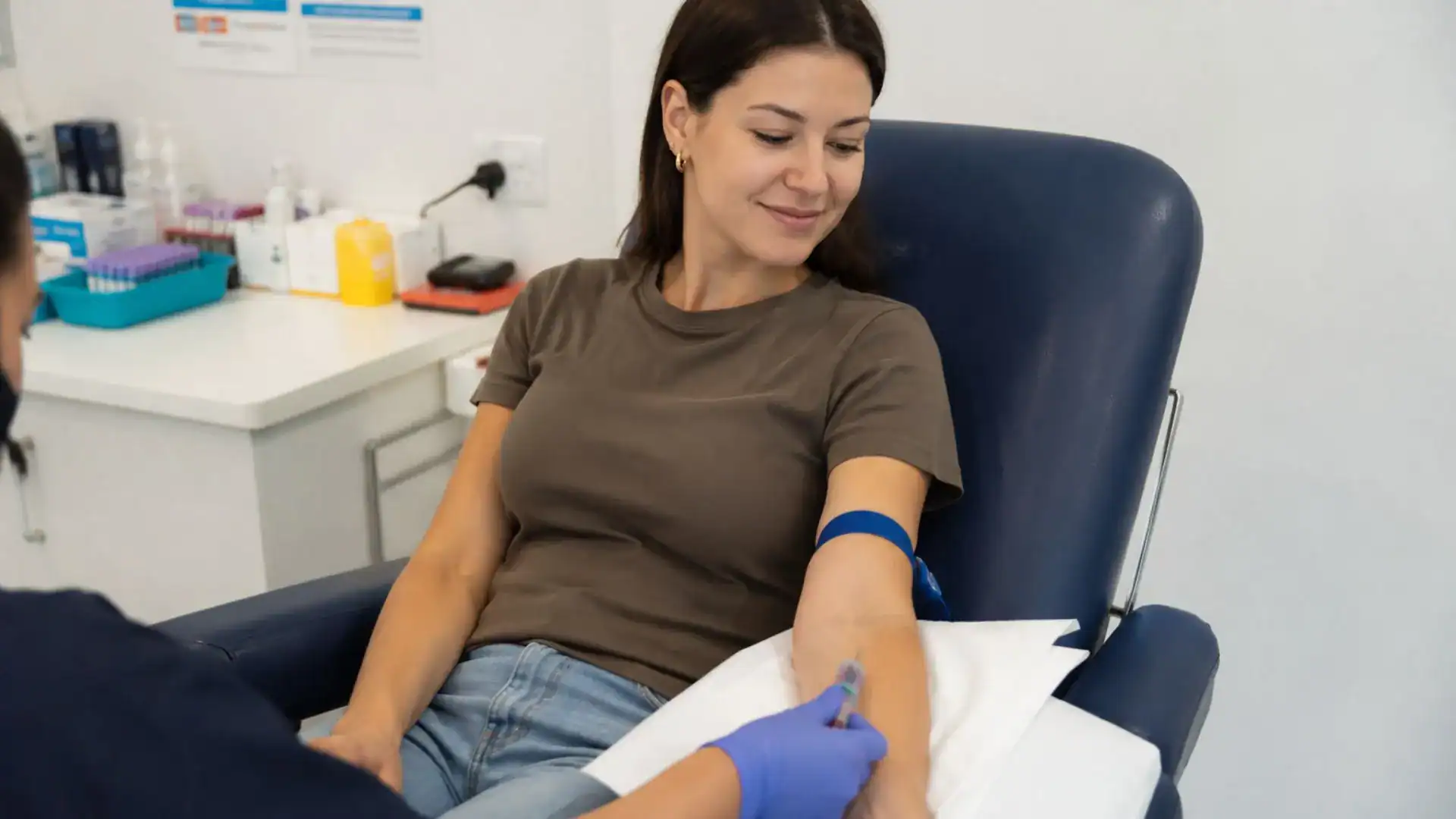
For women and people assigned female at birth, we may want to understand whether you are ovulating regularly and look more closely at your hormones, ovaries, uterus and, in some circumstances, fallopian tubes.
This may involve blood tests, ultrasound or other investigations depending on your history.
You may also hear about AMH testing, particularly when ovarian reserve is being assessed. AMH is only one piece of the fertility picture and needs to be interpreted alongside other information about you and your reproductive health.
There’s more to understand about what these tests look for and what the results can and cannot tell you.
What happens once you have your results?

clear. Fertility doesn’t always work quite like that.
Rather than looking at one number or result on its own, your fertility specialist will put the different pieces together. Your results may be considered alongside your age, medical and reproductive history and how long you have been trying to conceive.
Sometimes that points towards an issue that may be affecting fertility. Sometimes further investigation is useful. And sometimes fertility testing doesn’t find a clear explanation for why conception is taking longer than expected.
The next step is therefore different for everyone. It may be continuing to try naturally for a while, investigating something further, managing an underlying condition or talking about fertility treatment.
Having fertility tests doesn’t mean you are automatically heading towards IVF. It is simply a way to better understand your individual situation before deciding what comes next.
Before your fertility appointment
If you already have previous blood tests, scans, fertility results or relevant medical records, bring them along. It can also be useful to think about previous pregnancies or pregnancy losses, medical conditions, surgery and the medications you currently take.
If you have been keeping track of your menstrual cycle or symptoms, that information can also help build a picture of what has been happening over time. CHARLI is a free tool that allows you to record your cycle, symptoms and patterns, which you can then use to support conversations with your healthcare team.
Not sure what your next step should be?
You don’t need to know which fertility tests you need before you make an appointment. That’s something we can work through with you.
At Eve Health in Brisbane, your fertility specialist can listen to what has been happening, talk
through any concerns you have and recommend investigations where they may be helpful.
Sometimes the first step is simply having the conversation.
Comments are closed.